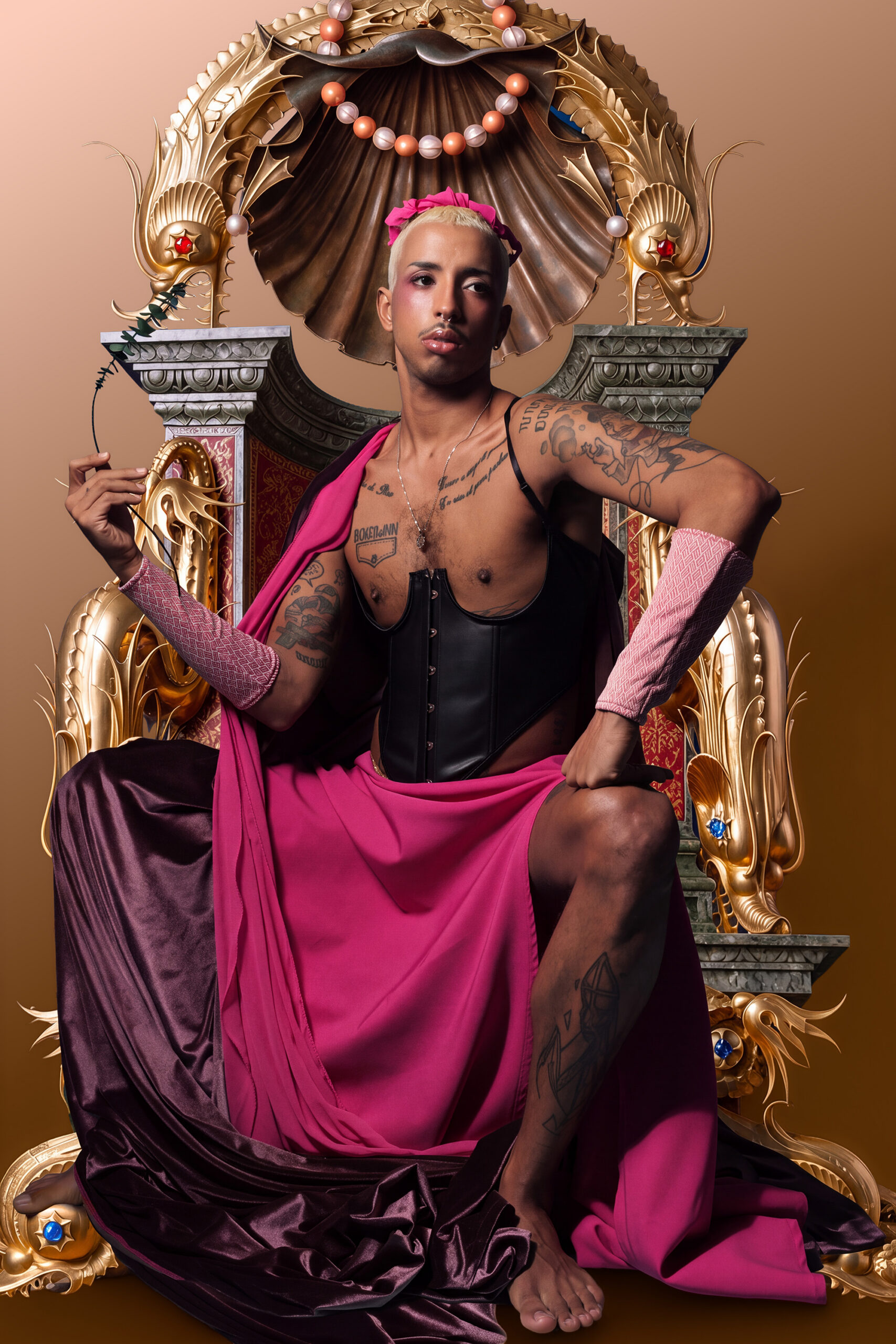
Ma-Donne: Sacred and Profane · 2025–ongoing · photography · graphic manipulation · virtual painting · AI
Statement
Ma-Donne: Sacred and Profane arises from the need to reinterpret the Western imaginary through the female body. Figures drawn from religious, political and cultural traditions are lifted out of their monumental dimension and brought back to the condition of living, vulnerable, contemporary bodies.
A reflection on the fragility of Western symbols and on the way the female body becomes the place where these symbols are preserved, contested and transformed.
The female body thus becomes the space in which these symbols are carried, questioned and reshaped. These presences reflect the contradictions of our time, opening new possibilities of meaning to the present.
The images in this series move through history, gathering its symbolic weight and returning it to the present; every collective value continues to exist only as long as it finds a body able to embody it.
The sources
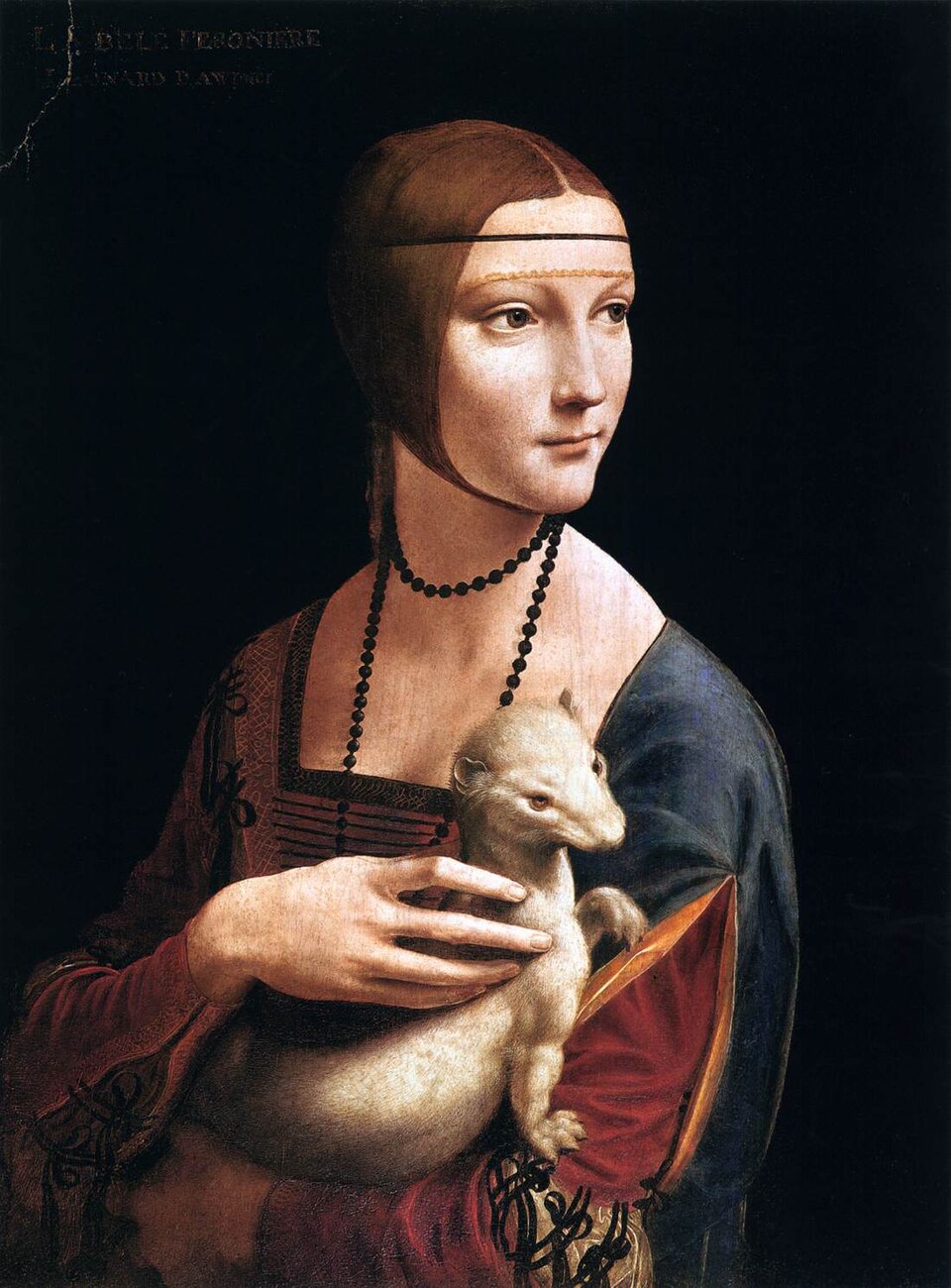
1. Leonardo da Vinci
Lady with an Ermine, 1489–1491
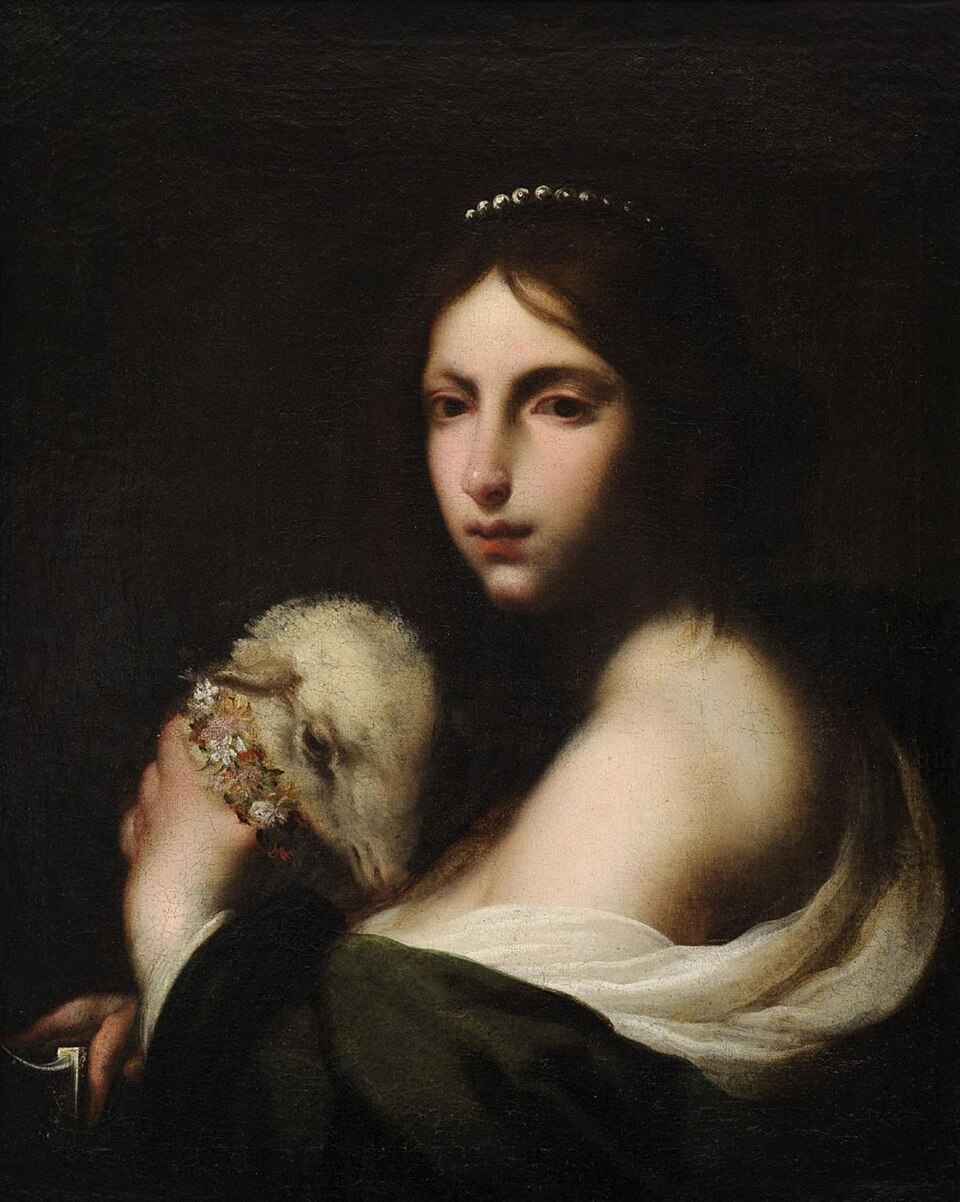
2. Francesco Furini
Saint Agnes, 17th century
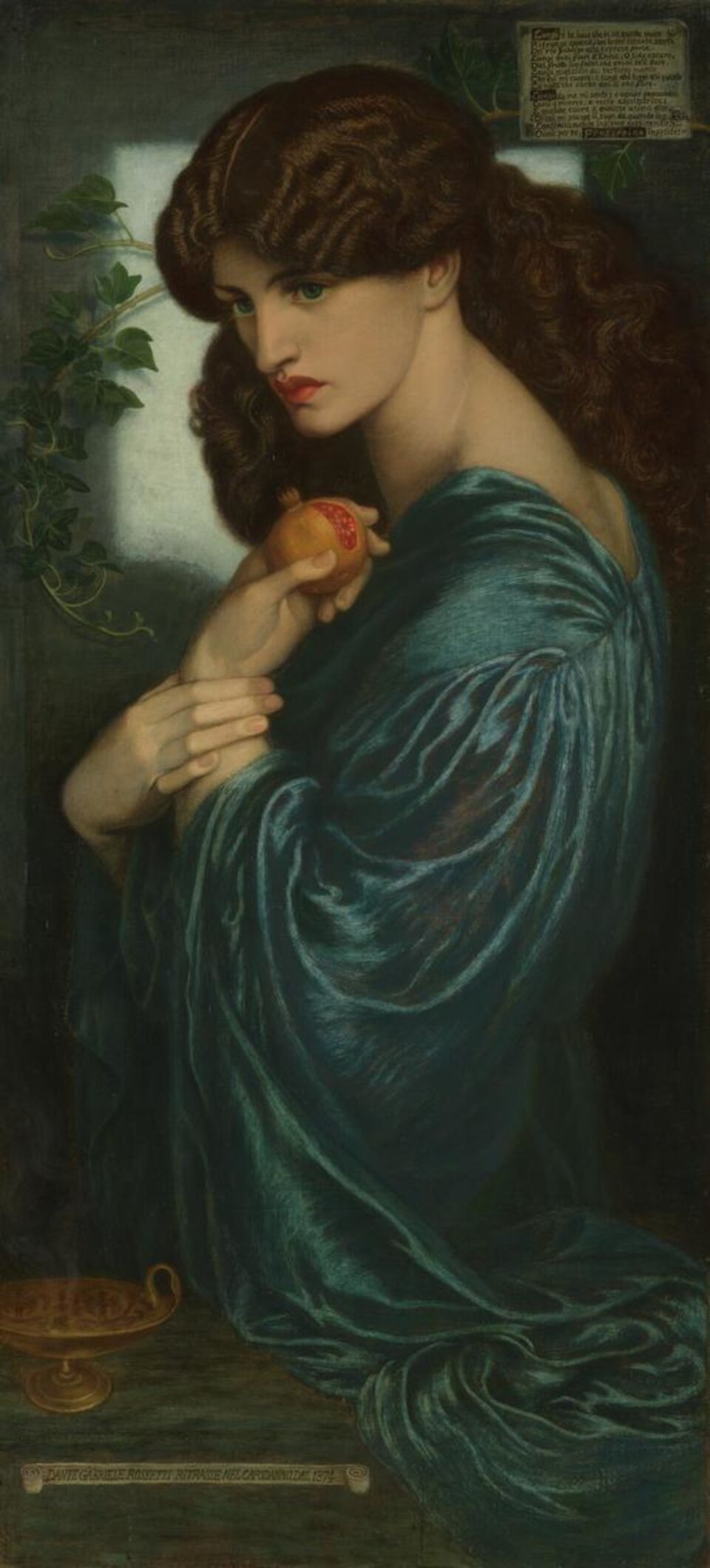
3. Dante Gabriel Rossetti
Proserpine, 1874
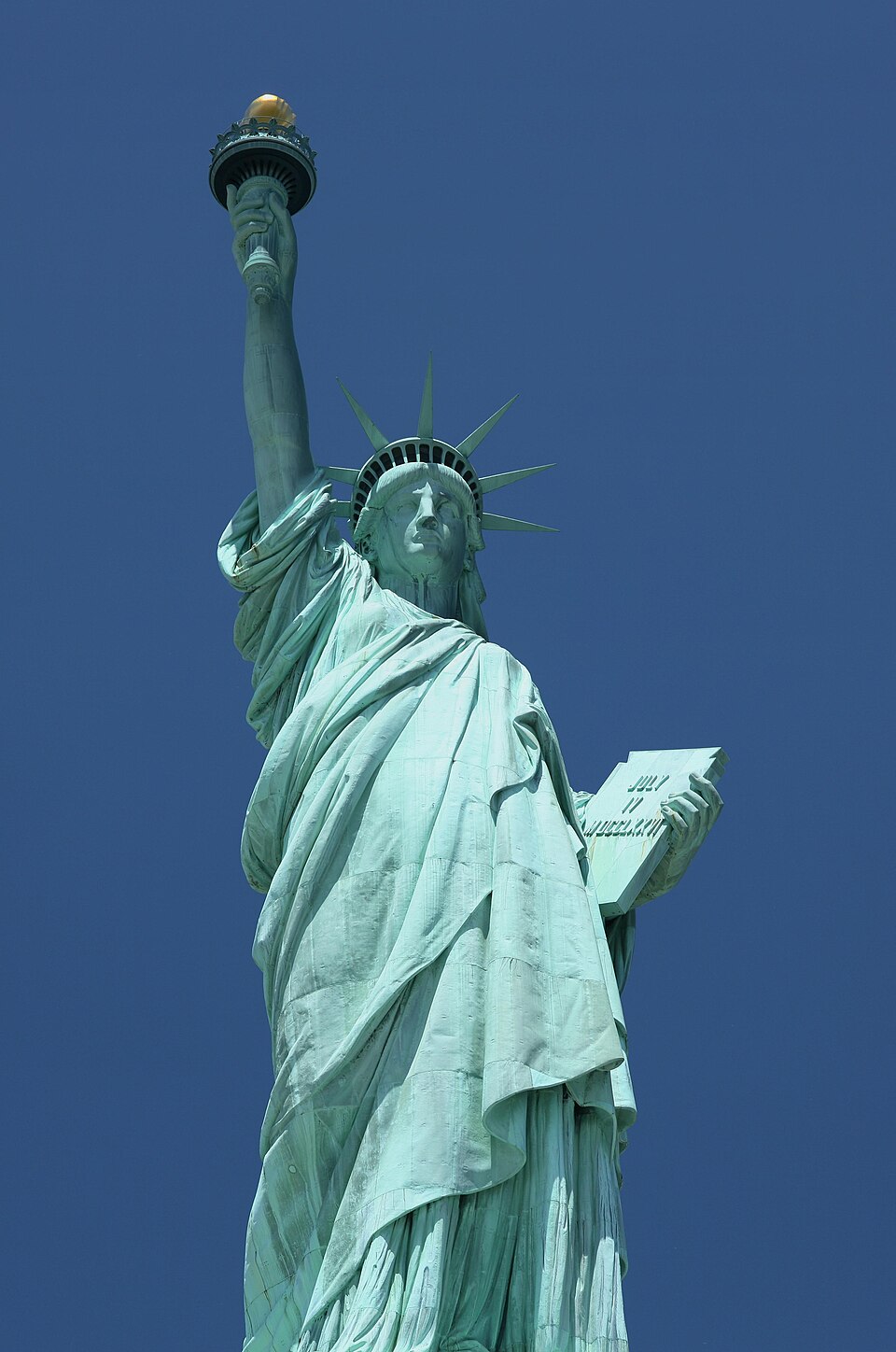
4. Frédéric Auguste Bartholdi
Statue of Liberty, 1886
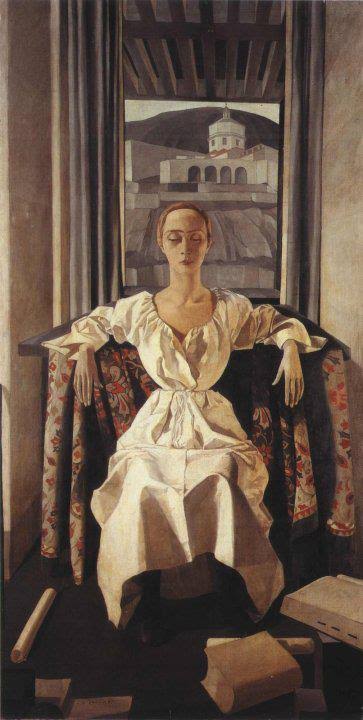
5. Felice Casorati
Portrait of Silvana Cenni, 1922
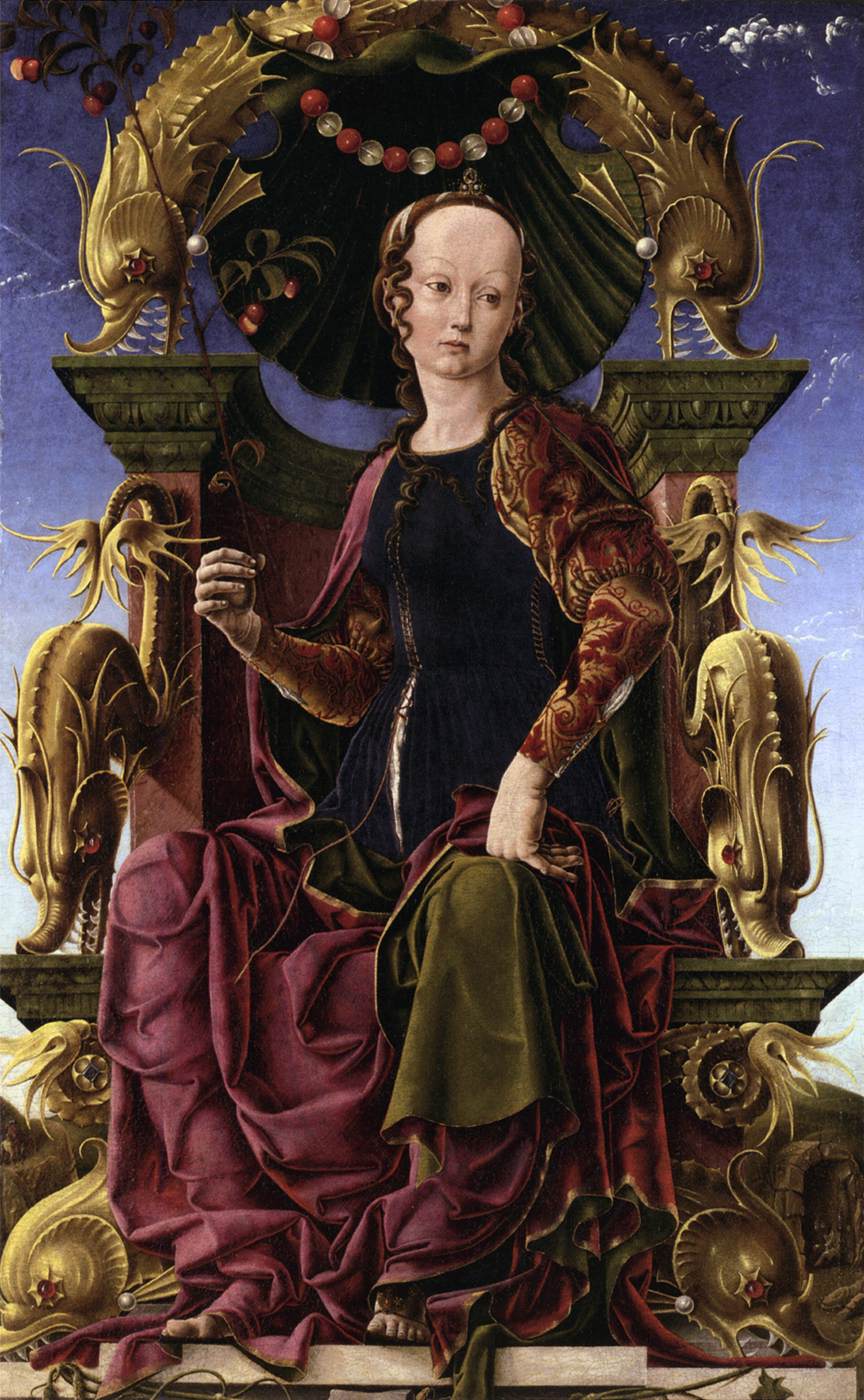
6. Cosmè Tura
Calliope, c. 1455–1460
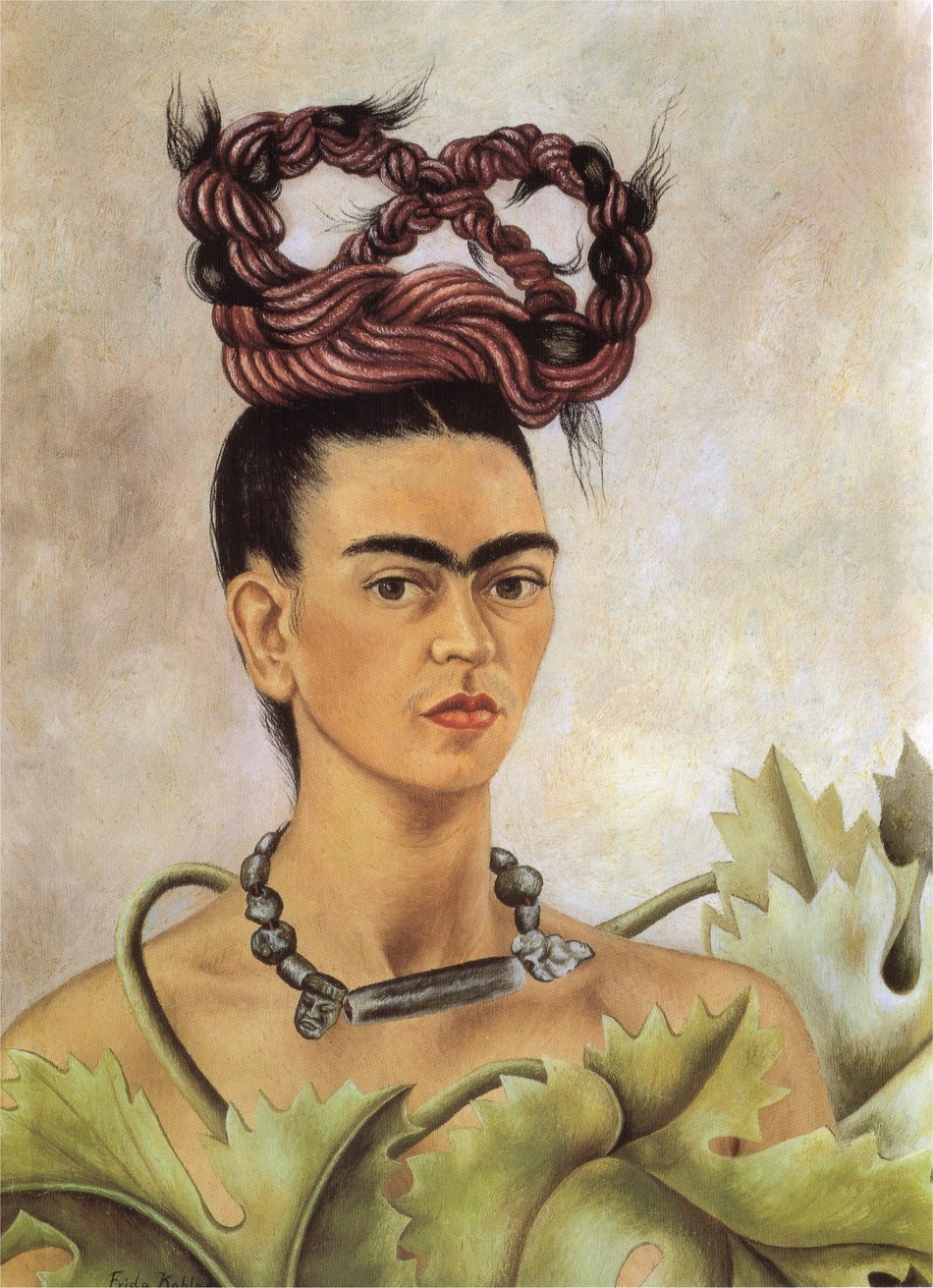
7. Frida Kahlo
Self-Portrait with Braid, 1941 · coming soon
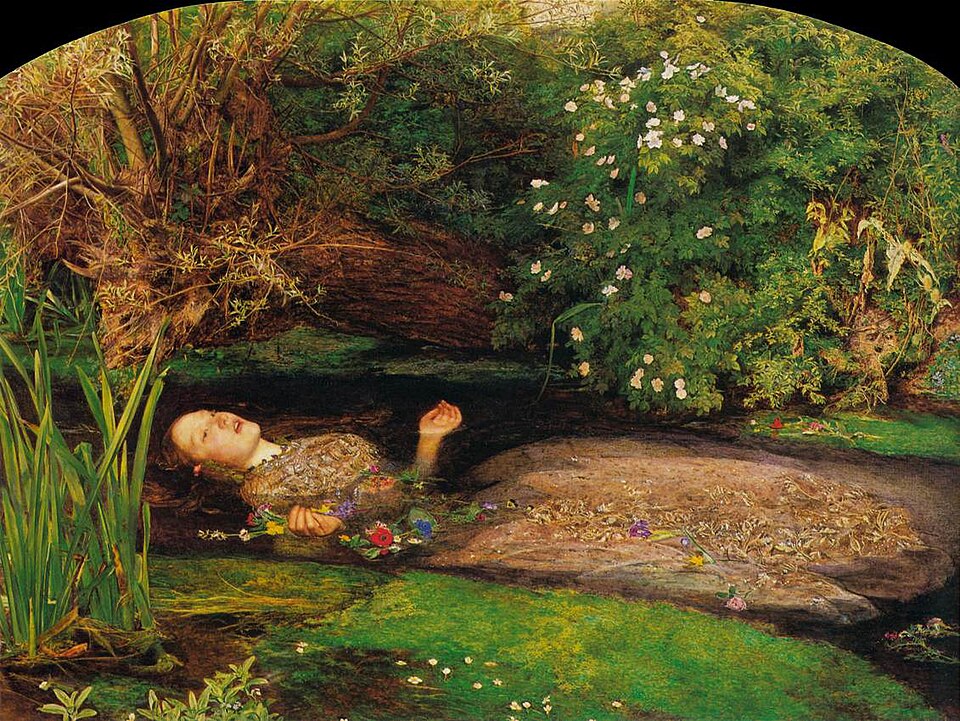
8. John Everett Millais
Ophelia, 1851–1852 · coming soon
Images of the works: Wikimedia Commons, public domain. Casorati and Kahlo: reproduced for the purpose of quotation.
The icons
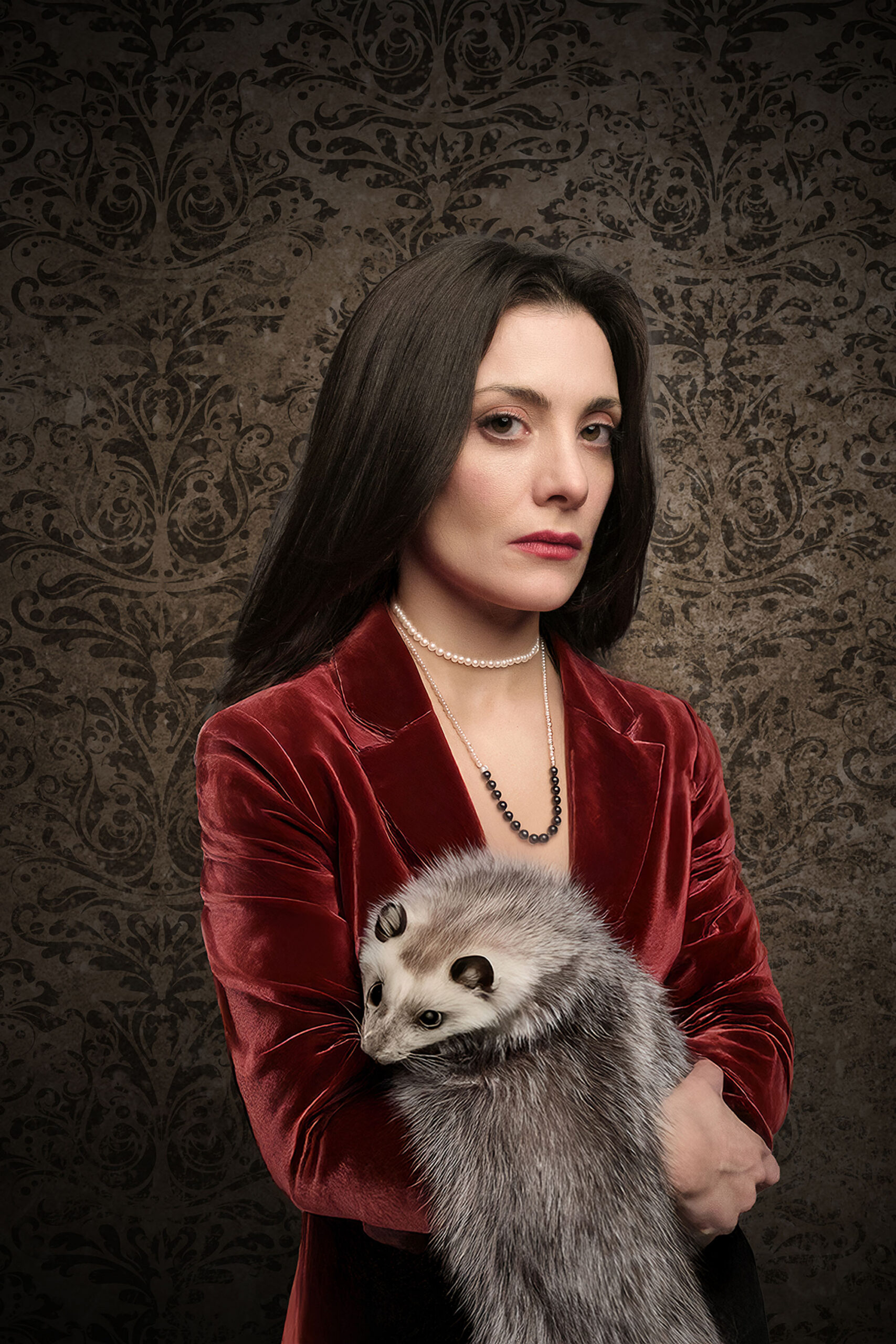
1. Hera Transforms Alcmene
after Lady with an Ermine, Leonardo
Inspired by Leonardo da Vinci’s Lady with an Ermine, this work was born in response to subtle cultural discrimination: the tendency not to credit women – and especially women considered beautiful – with logical and intellectual qualities, confining them instead to the emotional sphere.
The image reworks the Renaissance portrait in a contemporary key: the protagonist is depicted with a deliberately enlarged face, an aesthetic choice that becomes a conceptual device. It is not a caricature but an act of restitution: bringing the female mind to the fore, making it visible and unassailable.
The smooth face and the luxurious elements play on a paradox: what normally stereotypes and limits (beauty as a label) becomes a vehicle for showing what is not seen: the ability to reason, analyse and decide. A political portrait.
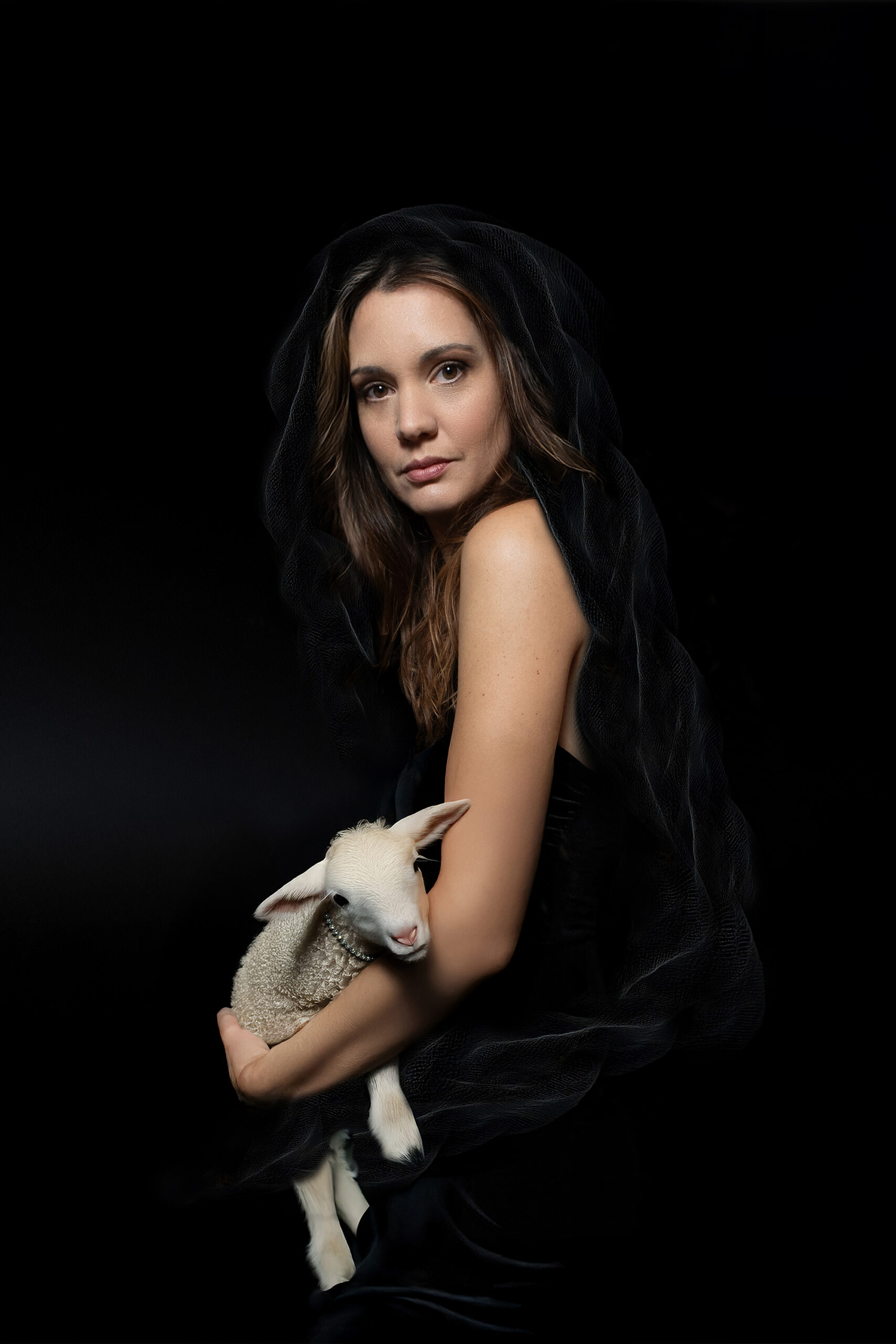
2. Woman with Lamb
after Saint Agnes, Furini
This work reinterprets the iconography of Furini’s Saint Agnes, Martyr through a contemporary lens. The photograph sets two symbolic registers against each other: the lamb as an emblem of innocence and protection, and the woman as a fragile yet resilient figure, suspended between protection and danger.
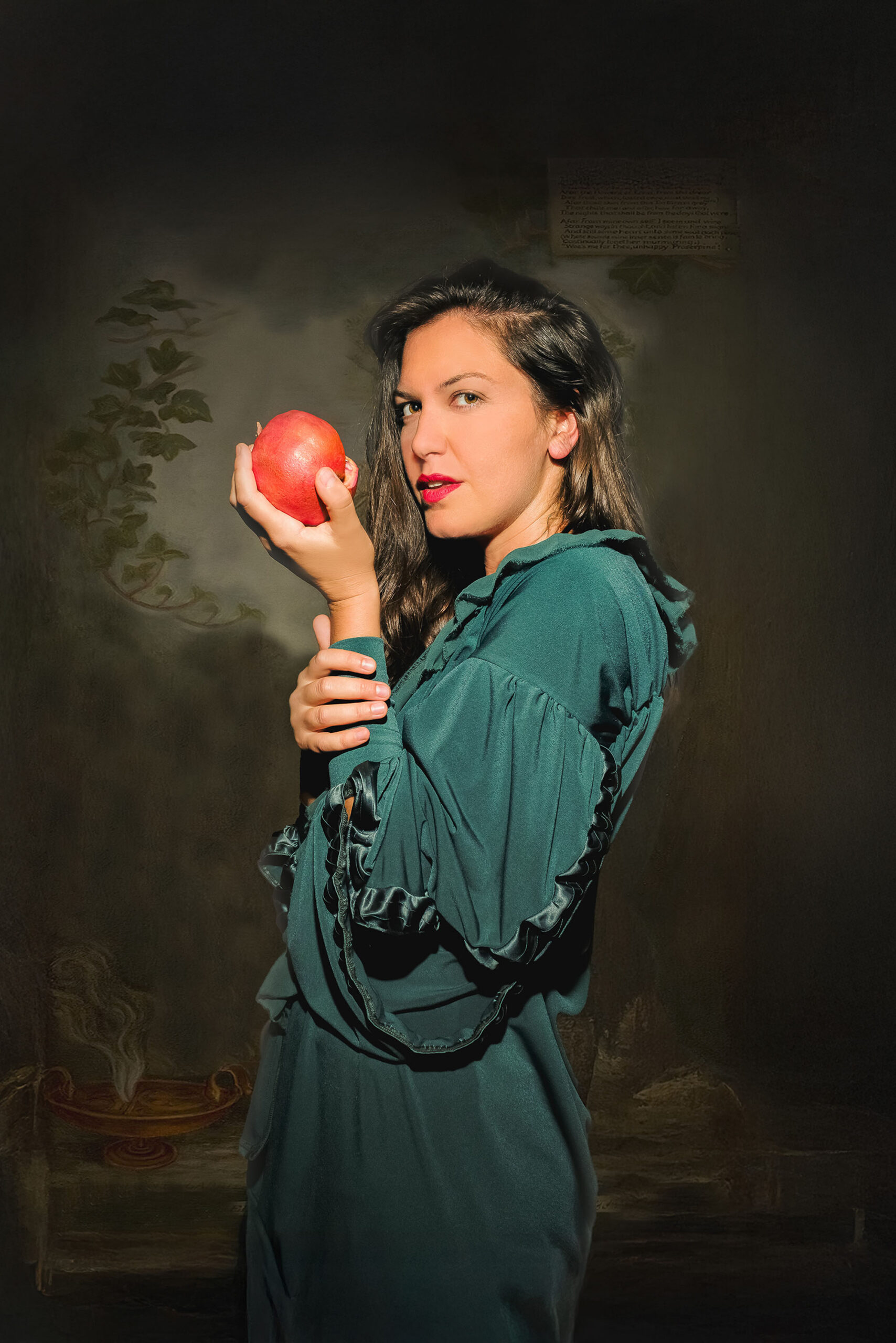
3. The Awakening of Persephone
after Rossetti’s Proserpine
Inspired by Dante Gabriel Rossetti’s Proserpine, this work overturns the sense of melancholy captivity that pervades the original figure. While in the nineteenth-century painting Persephone is absorbed, wrapped in a melancholy, contemplative intimacy, here the protagonist awakens into a dimension of awareness and power.
Her direct, proud gaze breaks the silence and offers itself as an act of seduction and rebirth. The pomegranate, a symbol of desire and destiny, is no longer a sign of constraint but a luminous source of pleasure and female affirmation. The myth becomes a mirror of a femininity that re-emerges, turning the memory of the myth into a contemporary gesture of freedom.
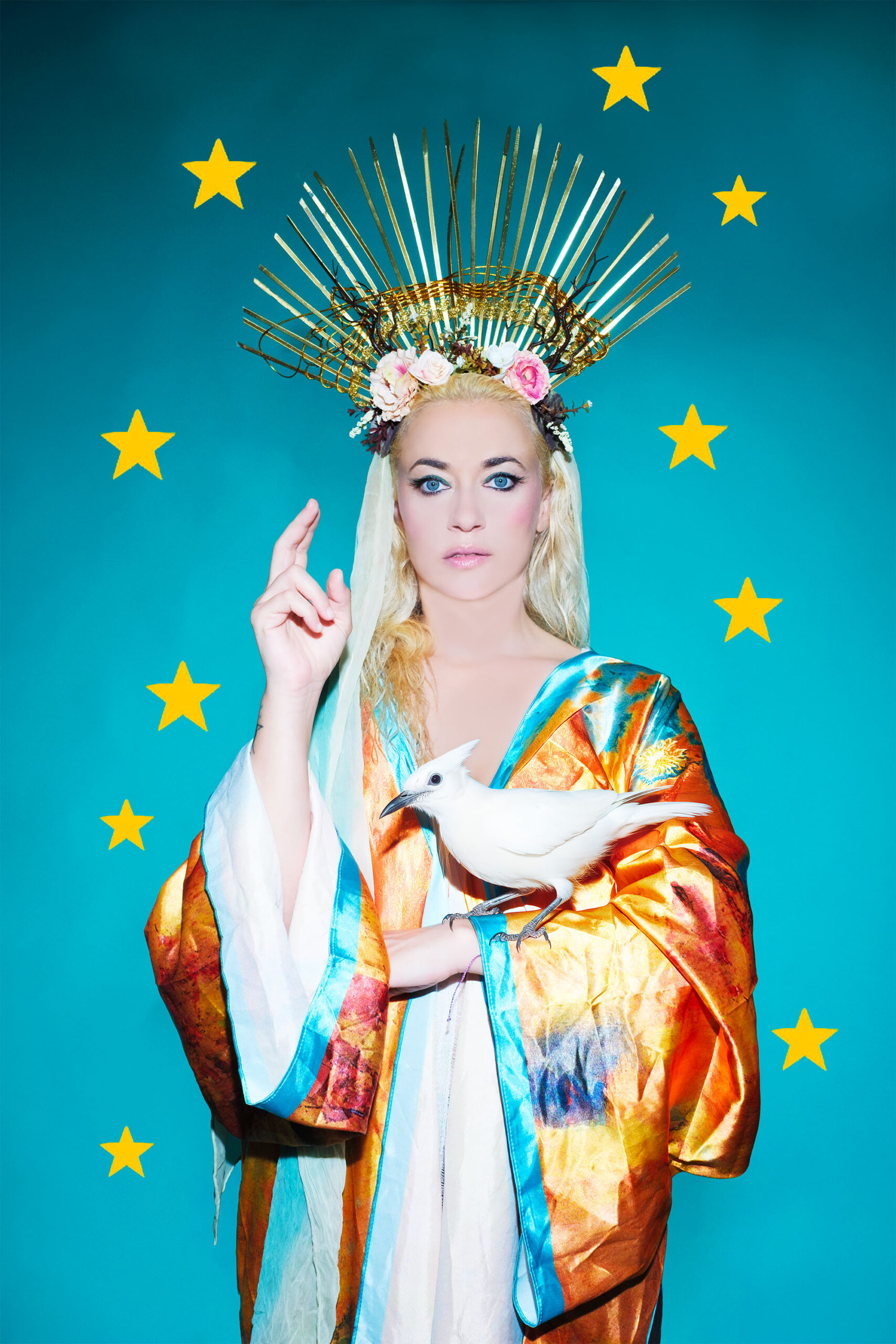
4. Liberty
after the Statue of Liberty, Bartholdi
Inspired by the iconography of the Statue of Liberty, this work revisits one of the most powerful symbols of the Western world, questioning its meaning today. The stars come loose from the flag and float in space, evoking an idea of freedom and opportunity that now appears ever more fragile, fragmented and uncertain.
The female figure does not hold a torch but protects a rare white jay, a symbol of good fortune. In an age marked by deep social and political tensions, the bird introduces a possibility of hope: the conviction that even the most fragile ideals can be safeguarded.
Freedom is no longer a motionless monument or a value acquired once and for all. It is a condition that must be questioned, protected and rebuilt every day.
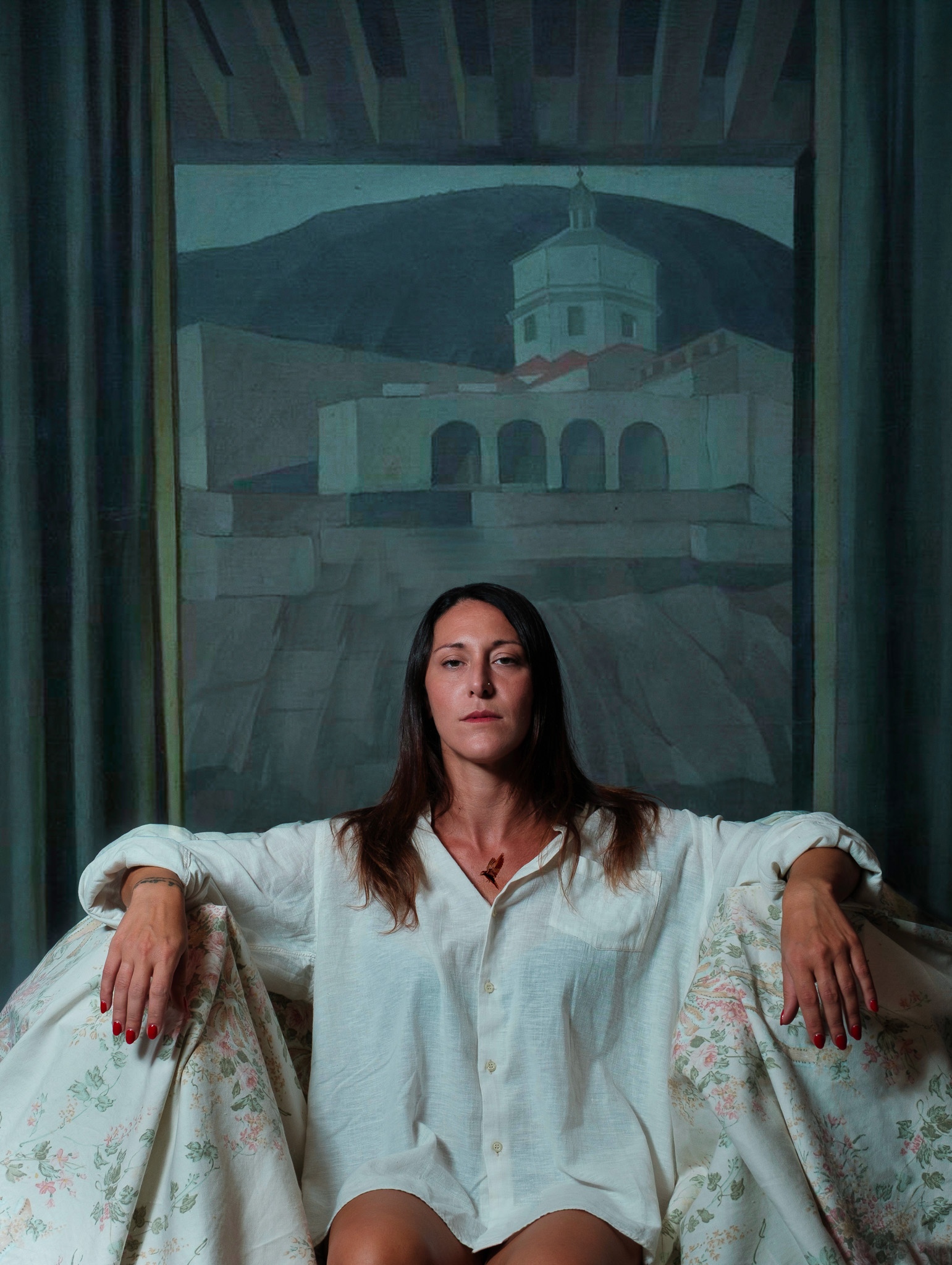
5. The Raised Gaze
after the Portrait of Silvana Cenni, Casorati
The presence changes, from abandonment to awareness. The figure, suspended in an enigmatic abandonment, regains her gaze and turns it squarely on the viewer. She is no longer a presence to be contemplated: she is a presence that recognises and asserts herself.
In the passage from abandonment to awareness, the image does not erase the model but changes her position: the woman is no longer only inside the other’s gaze. Now she is the one who holds that gaze.
6. The Voice of Calliope
after Cosmè Tura’s Calliope
The Queer Ma-Donna takes on her role and occupies her throne.
The work questions the identification of the feminine with biological sex and with motherhood, claiming the possibility of expressing it outside traditional gender categories.
The feminine is not an anatomical prerogative, nor an identity reserved for those born women. It is also a cultural, symbolic and personal dimension that can be lived and claimed beyond the boundaries of the body.
Ongoing series, 6 of 8 icons. Coming soon: Self-Portrait with Weave, inspired by Frida Kahlo, and Ophelia’s Breath, inspired by Millais.
Exhibitions and credits
- 2026 – La Libertà, Pop Shift, group exhibition, Off Start, Passo Blu, Genoa
The complete series is still unpublished.
Photography Federica Barcellona
Costumes Isabella Ramondini
Make-up Rosse Make Up (Rosamaria Luzi)